
AI in Education: giving teachers more time for what matters
Teachers don't lack passion. They lack time.
Teachers enter the profession to inspire, guide, and help children grow. Yet much of their working day is spent on tasks that take them away from direct interaction with students. Lesson planning, assessment, reporting, parent communication, and administrative responsibilities can quickly fill an already demanding schedule.
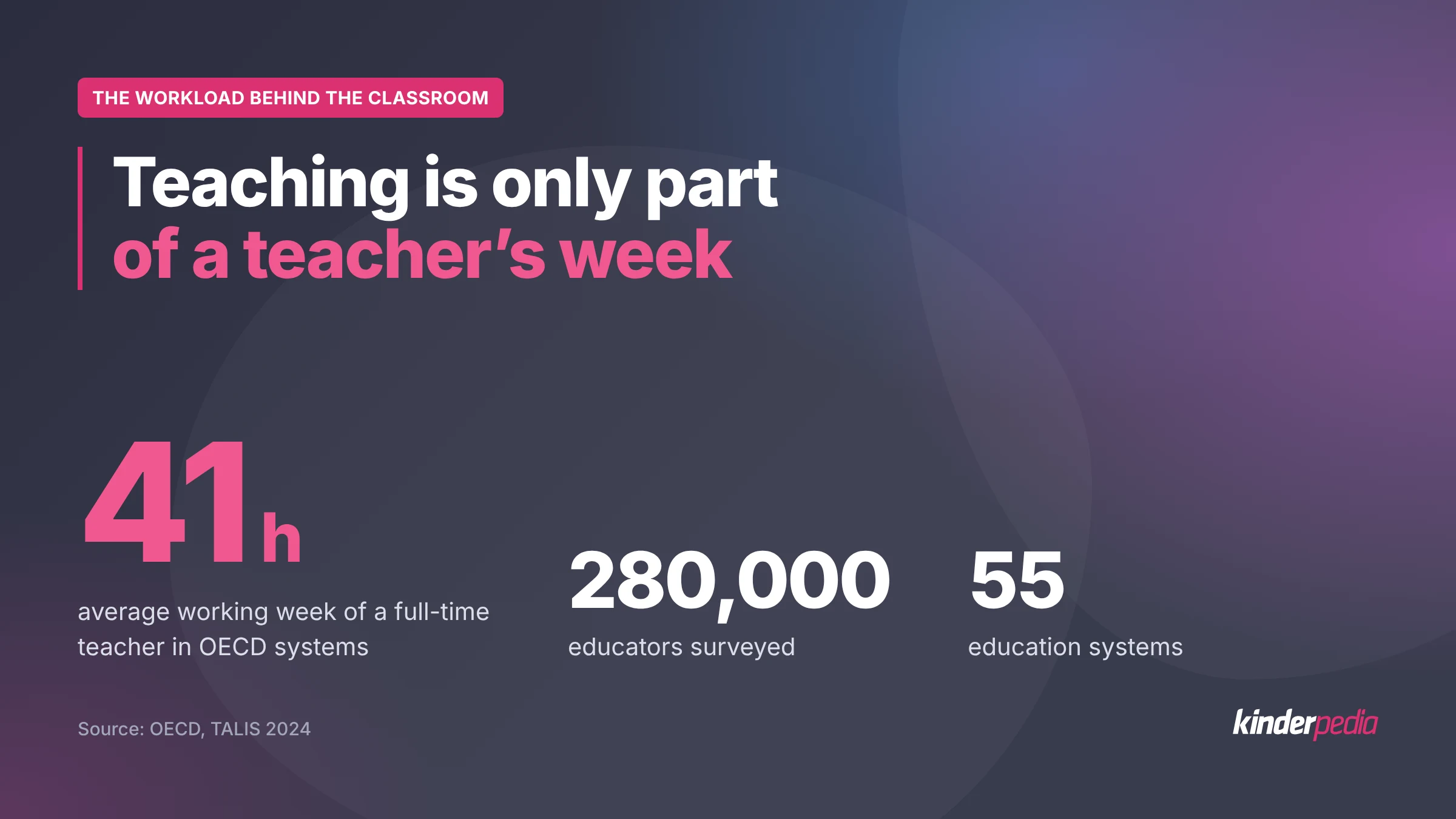
According to the OECD TALIS 2024 study, which gathered insights from approximately 280,000 educators across 55 education systems, full-time teachers in OECD education systems work an average of around 41 hours per week. Their responsibilities extend far beyond classroom teaching, and administrative workload remains an important source of stress. This helps explain why AI in education is becoming an increasingly important part of the conversation about teacher workload.
The opportunity isn't simply to introduce new technology into schools. It's to help teachers manage everyday responsibilities more efficiently and reduce time spent on repetitive tasks. Ultimately, it's about giving educators more time and energy for the work that matters most.
The hidden workload behind every school day
A teacher's work doesn't end when the lesson finishes. There's feedback to prepare, student progress to document, families to update, and tomorrow's activities to organise. Each responsibility is important, but together they can leave teachers with very little time to focus on individual student needs.
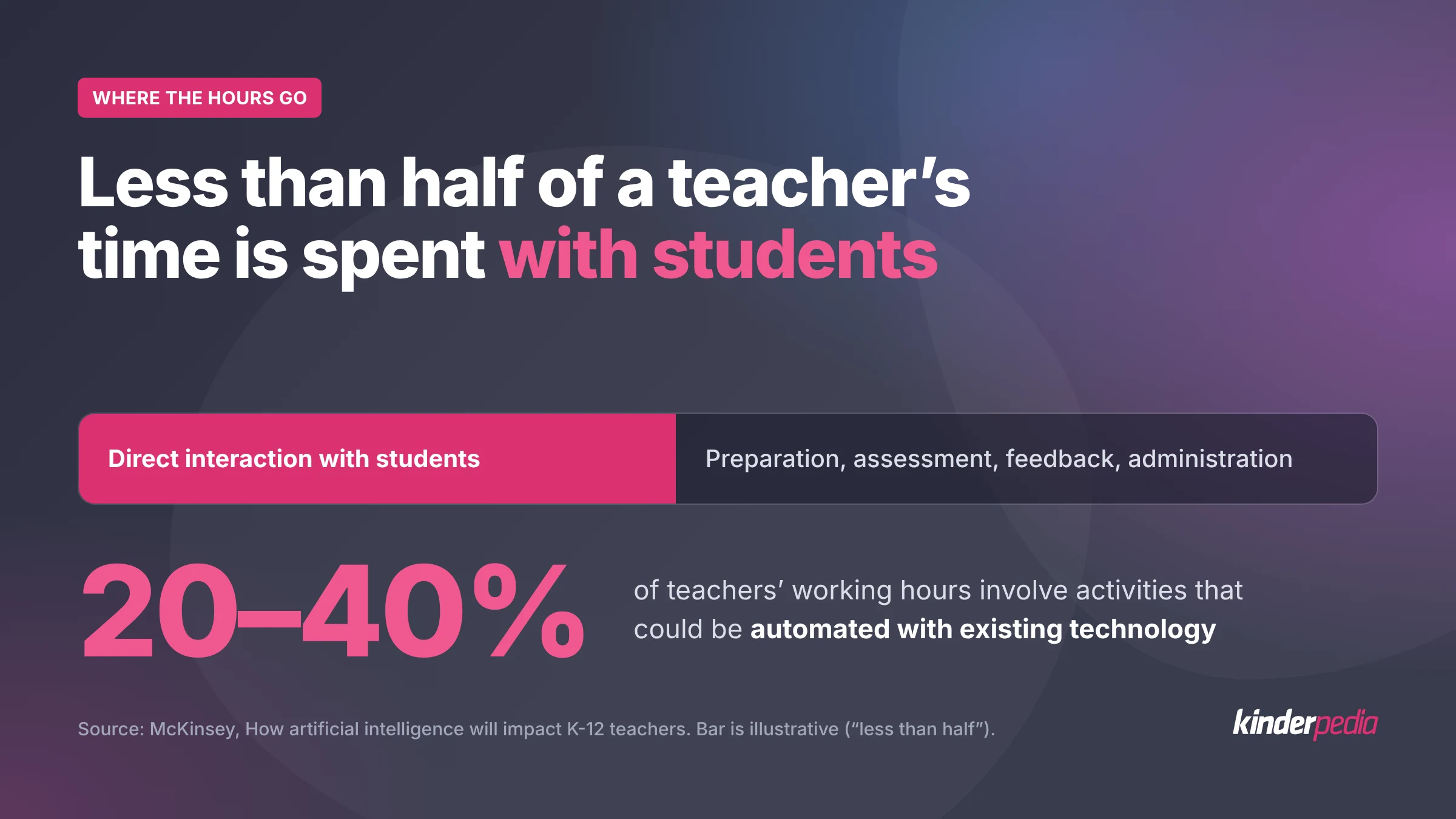
Research by McKinsey found that teachers in the four countries it studied spent less than half their working hours interacting directly with students. The remaining time was dedicated to preparation, assessment, feedback, administration, and other responsibilities. While many of these activities are essential, some involve repetitive steps that technology could help simplify.
McKinsey estimated that 20% to 40% of teachers' working hours involve activities with potential for automation using existing technology. This doesn't mean every teacher can automatically save 10 to 13 hours per week, but it highlights how much of their workload could potentially be streamlined. More importantly, it raises a valuable question about how that time could be better used.
AI in education is already giving teachers time back
AI is no longer something schools are simply exploring for the future. It's becoming part of everyday teaching and school operations, from preparing learning materials to improving communication and supporting administrative work. The OECD Digital Education Outlook 2026 highlights how generative AI can support educators across these activities when used thoughtfully and with appropriate human oversight.
An October 2026 Gallup survey found that 59% of surveyed US K-12 educators used AI tools during the 2025-2026 school year. Among those who used AI, 64% said it gave them more time for the parts of their work that mattered most. These findings suggest that AI is already providing practical benefits, even as adoption and implementation continue to evolve.
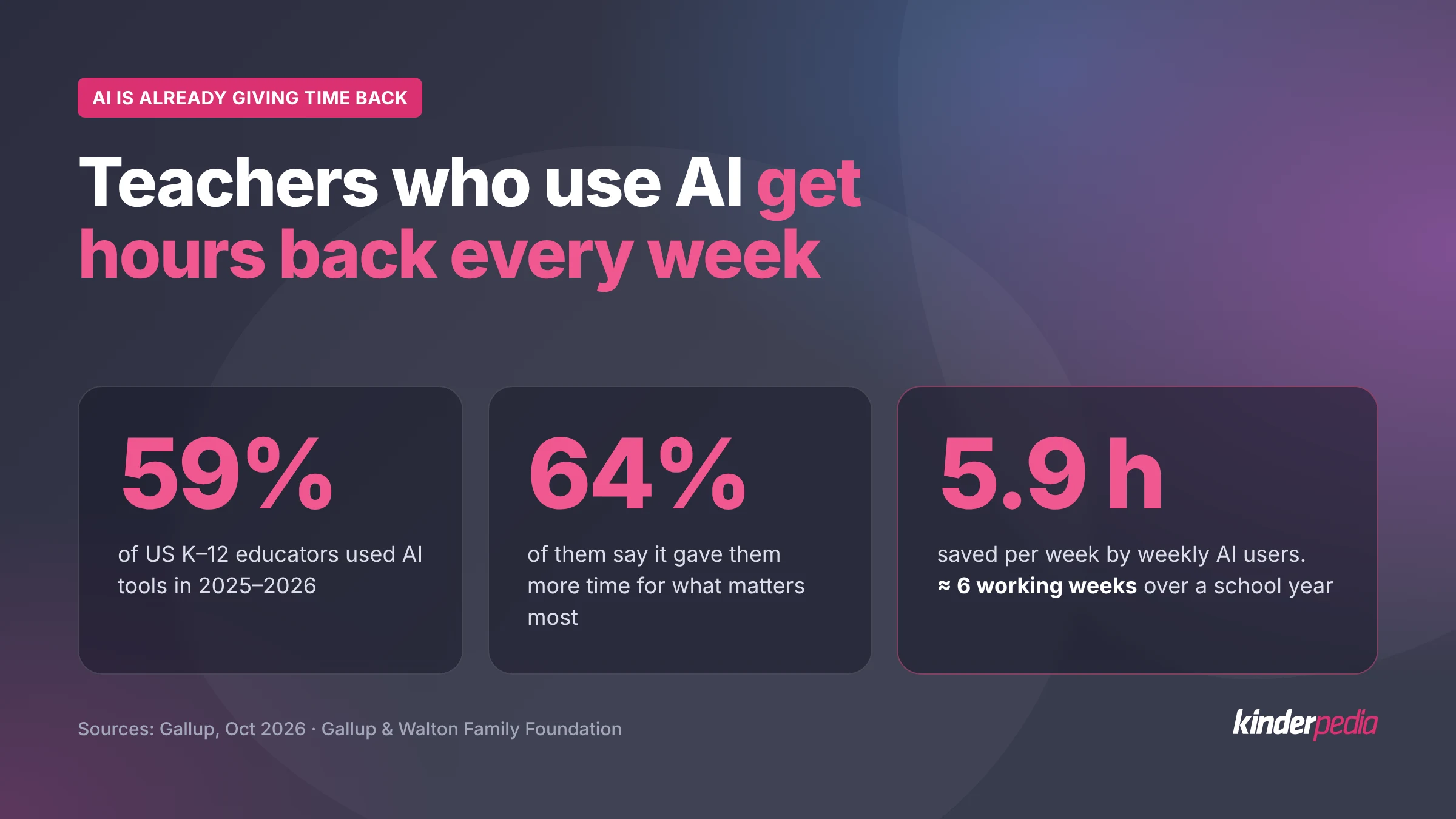
An earlier Gallup and Walton Family Foundation study found that US teachers who used AI at least weekly reported saving an average of 5.9 hours per week. According to the study's calculation, that is equivalent to approximately six working weeks over a school year. The real opportunity, however, is not simply to save hours, but to redirect that time towards students, thoughtful feedback, and stronger relationships with families.
The value of AI isn't simply doing things faster. It's creating more space for meaningful teaching.
Where AI makes the biggest difference in a teacher's day
The most practical benefits of AI often happen behind the scenes, through improvements to the tasks educators repeat every day. Rather than dramatically changing the classroom experience, AI can simplify preparation, communication, documentation, and reporting. These small improvements can make a meaningful difference when they become part of a teacher's daily routine.
Less time preparing learning materials
AI can help teachers transform an initial idea into a structured lesson outline, suggested activities, or differentiated exercises. Instead of preparing every resource from scratch, educators can start with a draft and adapt it to the needs of their students. This allows teachers to focus more on the educational value of the lesson and less on repetitive preparation.
The teacher's expertise remains essential throughout the process, particularly when evaluating the accuracy and relevance of AI-generated content. AI can suggest activities and organise information, but it cannot fully understand the individual learning needs, classroom dynamics, and personal circumstances of every student. Those decisions remain firmly in the hands of educators.
Faster, clearer communication with parents
Keeping families informed is an essential part of school life, but writing individual messages, announcements, and reminders can take considerable time. AI can help teachers draft messages, improve clarity, adjust tone, and summarise longer texts without starting from a blank page. This makes everyday communication more manageable while helping schools maintain consistent and meaningful relationships with families.
For international and multilingual school communities, these capabilities can be particularly valuable. Teachers often need to communicate with families who have different language preferences, expectations, and communication needs. AI-powered assistance can reduce the time spent preparing messages, while educators remain responsible for reviewing the information before sharing it.
Simpler reporting and documentation
Student observations, progress reports, and incident documentation are important parts of a teacher's responsibilities. They require accuracy, attention to detail, and clear communication, but preparing them manually can be time-consuming. AI can help organise existing information, structure notes, and turn observations into more accessible summaries.
This doesn't mean allowing technology to make decisions about students or generate conclusions without oversight. Teachers still provide the observations, interpret the information, and decide what should be communicated. AI simply helps make the documentation process easier and more efficient.
More time for meaningful feedback
Feedback is most valuable when it's timely, relevant, and tailored to each student's needs. AI can support teachers by helping organise assessment information, draft feedback, and identify areas that may require further attention. With less time spent preparing repetitive text, educators have more opportunities to focus on the individual learner.
However, meaningful assessment still requires professional judgment and a genuine understanding of the student. Technology can help structure information, but teachers provide the context, empathy, and experience that turn feedback into meaningful guidance. AI supports the process, while the teacher remains at the centre of the learning experience.
From AI tools to smarter school management
There's an important difference between using an AI tool occasionally and making technology genuinely useful across an entire school. A teacher might use one application to prepare lessons, another to draft emails, and a separate platform to record student progress. Each tool may offer individual benefits, but moving information between disconnected systems can create additional work.
This is where AI in education becomes particularly valuable when integrated into existing school workflows. Instead of introducing another application into an already busy day, AI can support the activities teachers and school staff are already carrying out. Communication, reporting, and documentation become easier when the technology works within the systems educators use every day.
For example, parent messages can be drafted directly within the school's communication platform, while student observations can be summarised where development is already being documented. Incident reports can be prepared using information recorded during the reporting process, reducing the need to repeat the same details across several tools. The objective isn't to give teachers more technology to manage, but to make their existing tools more useful and efficient.
What AI-powered school management looks like with Kinderpedia
At Kinderpedia, we believe technology should make everyday school life simpler, not more complicated. That's why we're integrating AI into the tools teachers, educators, and school leaders already use for communication, student development, and administration. Rather than introducing AI as a separate process, the goal is to offer practical assistance within familiar workflows.
With Kinderpedia AI, teachers can reduce the time spent on repetitive writing and reporting tasks while remaining in control of the information they share. AI-powered assistance helps them prepare messages, organise observations, and document important events more efficiently. These capabilities are designed to support educators in their daily work, without replacing their expertise or professional judgment.
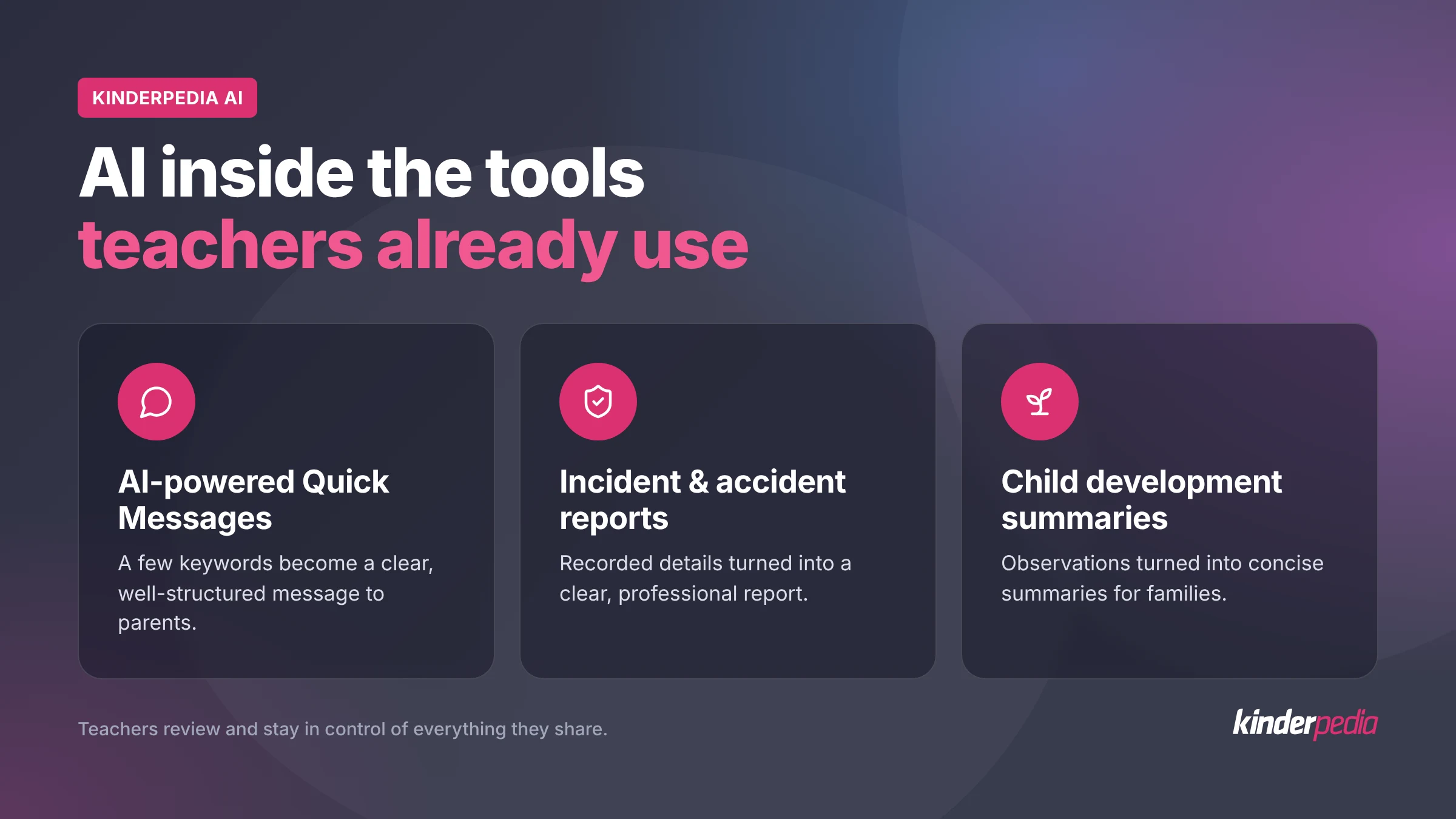
AI-powered Quick Messages
Teachers communicate with parents throughout the school day, whether they're sharing an announcement, sending a reminder, or providing an individual update. With Kinderpedia AI, they can enter a few keywords and generate a clear, well-structured message instead of writing everything from scratch. They can also improve wording, correct text, and summarise longer messages before sending them.
This is particularly useful for educators who manage frequent communication with several families. It helps reduce repetitive writing while keeping messages clear, professional, and relevant. Teachers remain responsible for reviewing and personalising the final content.
To see how this feature works in practice, explore our article on Instant AI Messages in Kinderpedia, including how AI-powered assistance can make everyday communication with families faster and easier.
AI-assisted incident and accident reports
When an incident occurs, educators need to document the situation carefully and keep the relevant people informed. Kinderpedia helps structure the essential information, while AI assists in turning the recorded details into a clear, professional report. This can make the documentation process more efficient without compromising the importance of accurate reporting.
The educator remains responsible for the facts, context, and final review of the report. AI helps with wording and organisation rather than making decisions about what happened or how a situation should be handled. This allows staff to spend less time preparing documentation and more attention on the children involved.
AI-powered child development summaries
Documenting children's progress involves observations, reflections, and regular communication with families. Kinderpedia AI helps educators turn recorded observations into concise, understandable summaries that can support clearer conversations about development. Instead of manually organising every note into a report, teachers can work with an AI-assisted draft and refine it using their professional knowledge.
The teacher's understanding of each child remains central to the process. AI can help structure and communicate information, but it cannot replace the human insight that comes from observing and supporting children every day. The result is a more efficient reporting process that keeps the educator's expertise at its heart.
These capabilities are part of Kinderpedia's connected school management platform, which brings communication, academic information, and administration together. By integrating AI into everyday school processes, Kinderpedia aims to reduce repetitive work and make important information easier to manage. This is where AI in education can make a practical difference: as useful support within the school day, rather than another disconnected tool.
Discover how Kinderpedia AI supports teachers and school leaders.
Responsible AI starts with supporting teachers
Introducing AI into education isn't just about choosing the right features. It's also about helping educators understand how to use these tools confidently, responsibly, and effectively. Schools need clear guidelines, practical training, and processes that protect student information while supporting teachers' professional judgment.
A Gallup study published in May 2026 found that only 18% of surveyed US K-12 teachers reported receiving formal guidance from school administrators about using AI tools at work. This highlights an important gap between the growing availability of AI and the institutional support teachers receive. Without clear expectations and appropriate training, even useful technology can create uncertainty.
The OECD Digital Education Outlook 2026 also emphasises the importance of human oversight, privacy safeguards, and thoughtful implementation. School leaders therefore need to consider not only what AI can do, but how it fits their educational values, existing processes, and responsibilities. The best approach is one where AI strengthens teachers' professional judgment rather than attempting to replace it.
What happens when teachers get their time back?
Imagine a teacher starting the day without a long list of messages waiting to be written. Student observations are already organised, parent updates are easier to prepare, and important information is accessible when needed. Instead of spending additional hours on repetitive documentation, the teacher has more flexibility to focus on students and classroom activities.
That time might become an individual conversation with a student who needs encouragement, a more engaging learning activity, or an opportunity to collaborate with colleagues. It might mean providing more thoughtful feedback or communicating with a parent before a small concern becomes a bigger problem. These are the moments where teachers' experience, attention, and empathy make the greatest difference.
As schools explore the possibilities of AI, the most important question shouldn't be how many tasks can be automated. It should be how much more time educators can dedicate to meaningful teaching and stronger relationships with students. The success of technology should ultimately be measured by the value it brings to the people using it.
The future of education isn't about AI. It's about time.
The conversation around AI in education often focuses on what technology can do, but perhaps the better question is what it can help teachers do more of. More teaching, more listening, more creativity, and more meaningful connections with students and families. These are the outcomes that make technology valuable in an educational environment.
AI won't solve every challenge facing schools, and it shouldn't replace the relationships, expertise, and human understanding at the heart of education. But when introduced thoughtfully and integrated into existing workflows, it can reduce unnecessary workload and give educators something they rarely have enough of. Time to focus on their students, their professional growth, and the moments that make teaching rewarding.
Because the future of education isn't about replacing teachers with technology. It's about giving teachers more freedom to do what they do best.
At Kinderpedia, that's the future we're building towards. By combining connected school management with practical AI-powered assistance, we want to help educators spend less time on repetitive tasks and more time on meaningful interactions. Explore Kinderpedia AI and discover how smarter communication, reporting, and school management can support your team.


