How schools can build stronger partnerships with families in the age of AI


Communication has never been easier. Yet meaningful engagement remains one of the biggest challenges schools face today. As schools embrace new technologies and AI-powered tools, one thing remains irreplaceable: the relationship between educators and families. This practical guide explores how schools can shift from parent involvement to family engagement, creating stronger partnerships that support learning both in and out of school.

Free resource developed by Kinderpedia in collaboration with Olimpia Meșa
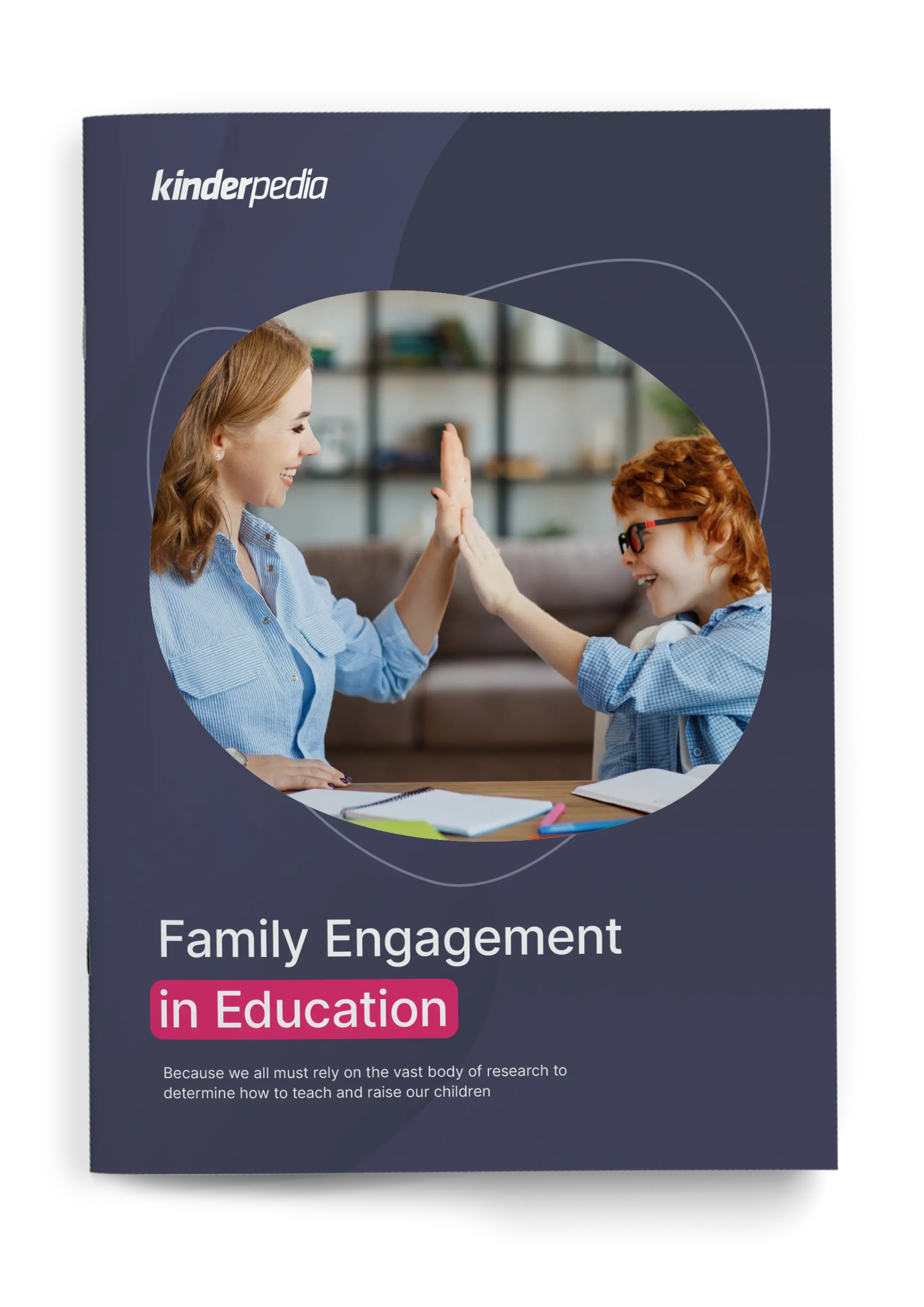
Family Engagement in Education

Why family engagement matters now

Children spend 75 to 85% of their waking hours outside school. What happens at home shapes learning as much as what happens in the classroom. When home and school work together, results follow. Research consistently shows family engagement is one of the strongest predictors of student success:
28% fewer course failures

Sharing weekly updates with parents on grades, assignments, and attendance cut course failures by 28% and lifted attendance by 12%. Struggling students gained the most.
Higher achievement

Parent engagement improves attainment more than any other single factor. It matters more than school effects alone.
Lower dropout rates

Students with involved families finish school on time and earn higher grades.
Fewer risk behaviours

Engaged parents mean teens less likely to smoke, drink, or take risks.
Stronger wellbeing

Family support builds confidence, resilience, and focus. The foundations of learning.

What's inside the whitepaper?

This guide combines research, practical examples, and proven strategies from schools that successfully engage families as learning partners.
Family Engagement in Education
  • From Parent Involvement to Family Engagement
    Understand the difference between informing parents and actively involving families in the learning journey.
  • Why family engagement impacts student success
    Explore the research connecting family engagement to academic achievement, wellbeing, motivation, and long-term outcomes.
  • Expectations, fears, and trust
    Learn what parents expect from schools, what teachers expect from families, and how misunderstandings often create tension.
  • The barriers that block collaboration
    Discover the fears, assumptions, and communication gaps that prevent schools and families from working together effectively.
  • Practical strategies for schools
    Concrete ideas that school leaders and educators can implement immediately to strengthen family engagement.
  • Making learning visible
    Learn how schools can help parents better understand what children are learning and how they can support that learning at home.
  • Technology as an enabler
    Discover how digital tools can strengthen trust, communication, and collaboration without replacing the human element.
About the authors
Olimpia Meșa

Olimpia Meșa

Olimpia Meșa is a learning design expert, educational consultant, author of How People Learn, co-founder of Book To Courses™ Online School, and Kinderpedia Ambassador. With more than 20 years of experience in learning and development, she has worked with thousands of children, parents, educators, and school leaders worldwide. Her work focuses on helping schools design learning experiences that extend beyond the classroom and create meaningful partnerships between educators and families.
"Learning never happens in isolation. It happens through relationships." - Olimpia Meșa
Cybersecurity in schools

Evelina Necula, CMO Kinderpedia

Evelina Necula is an EdTech entrepreneur, communication specialist, co-founder and CMO of Kinderpedia, and mother of a school-aged child. For the past decade, she has been working at the intersection of education, technology, and family engagement, helping schools build stronger partnerships with families through meaningful communication and modern school management practices. Today, Kinderpedia supports more than 2,000 educational institutions in over 40 countries, connecting educators, children, and parents through a shared learning experience
Download the Family Engagement Whitepaper
Whether you lead a school, manage a nursery, or work with families every day, this guide helps you build stronger school-family partnerships and a more connected learning community.
Created with Olimpia Meșa, Learning Design Expert and Kinderpedia Ambassador, it combines solid research with real classroom experience.
Get your free ebook
Want more than the guide?
Kinderpedia doesn’t just explain family engagement; it helps schools build it every day. With one platform for communication, learning visibility, feedback, events, progress updates, and parent engagement, Kinderpedia helps schools move from scattered messages to meaningful collaboration. See how Kinderpedia supports stronger school–family partnerships.

FAQ: Family Engagement in Education

What is family engagement in education?

Family engagement is an ongoing partnership between schools and families that supports a child's learning, well-being, and development. It differs from traditional parent involvement by focusing on continuous, two-way collaboration rather than occasional attendance at school events. Researchers define it as a shared responsibility between families, schools, and communities to actively support children's learning.

What is the difference between parent involvement and family engagement?

Parent involvement usually means attending meetings, events, and school activities. Family engagement goes further: it helps families actively support learning at home and take part in educational decisions. In short, involvement is about showing up, while engagement is about an ongoing partnership between home and school.

Why is family engagement important?

Family engagement is one of the strongest predictors of student success. Research links it to higher academic achievement, better attendance, improved behaviour, stronger wellbeing, and higher graduation rates. One major research review concluded that parent engagement improves attainment more than any other single factor, with a bigger effect than school differences alone.

How does family engagement improve student achievement?

Students perform better when families understand learning goals, reinforce learning at home, and stay in regular contact with teachers. In one randomised study, sharing weekly updates with parents about grades, assignments, and attendance reduced course failures by 28% and increased attendance by 12%, with the largest gains for struggling students.

How can schools improve family engagement?

Schools improve family engagement by making learning visible, building two-way communication, helping parents understand how children learn, and creating practical chances to collaborate beyond traditional parent meetings. The most effective approaches are consistent and personal, using plain language rather than educational jargon.

How can technology support school-family partnerships?

Technology supports school-family partnerships by making communication more consistent, sharing learning progress in real time, and giving parents visibility into classroom activities. The most effective digital tools strengthen relationships rather than replace them. For example, automated two-way messaging platforms have been shown to improve both parent-teacher communication and student outcomes.

Brazil
Av. Dr. Mário Vilas Boas Rodrigues
São Paulo - SP, 04723-000, BR
Portugal
Av. Infante Dom Henrique 143,
1950-406 Lisboa, PT
Romania
46-48 Calea Plevnei
010233 Bucharest, RO
Switzerland
Langgasse 47c
6340 Baar, CH
United Arab Emirates
Al Khatem Tower, Al Maryah Island
Abu Dhabi, UAE
United Kingdom
30 Churchill Pl, Canary Wharf
London E14 5RE, UK